

Moving $6B+ in OTC trades off WhatsApp and unifying Yellowcard's treasury and payment infrastructure into one platform.
Yellowcard's Treasury Portal was live and generating revenue, but only for API clients. OTC clients had no product at all. Trades lived across WhatsApp, Telegram and email. Meanwhile the Partner Portal was painful to use, too many steps, no clarity, no confidence.
PS: Some process documentation and internal screens are omitted due to NDA requirements. Happy to discuss the thinking behind key decisions in detail.
ROLE
Lead Product Designer
TEAM MEMBERS
Stacey Ondimu
Product Manager
Liz Reid
Product Owner
Others
Across engineering, treasury and finance
TOOL STACK



The problem
The OTC desk was running on WhatsApp. The Partner Portal was barely usable.
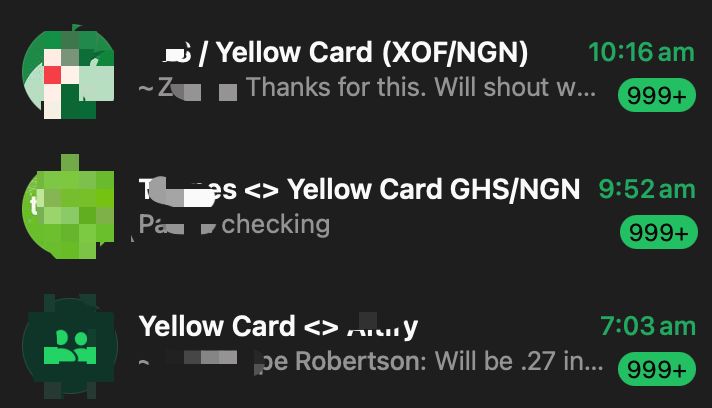
Yellowcard's OTC clients were managing high-volume trades across WhatsApp, Telegram and email. No audit trail, no visibility, no central system. Account teams held everything together manually.
The Partner Portal existed but created its own problems. Too many steps to complete basic transactions. No clear navigation. Partners were losing time on operations that should have taken seconds.
The problems in a nutshell:
No centralisation
OTC trades lived across five different platforms. Nothing was connected and nothing was trackable.
No efficiency
The Partner Portal required too many steps for basic operations. Speed was a luxury partners didn't have.
No visibility
Clients had no real-time view of their transactions or trade status. Everything had to go through account teams.
No scalability
Manual OTC processes couldn't grow with the business. Every new client added more operational weight.
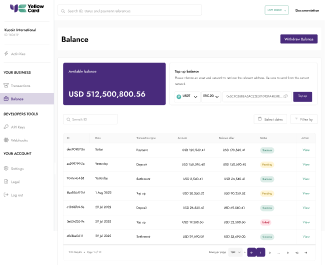


Top up and withdrawal had 2 separate mental models, and was hard to operate

Some Partners were constantly requesting for a way to manage money across several wallets. We didn’t have that yet
There was no way to download and manage transaction statements
Demand was high for other security operations like multi signature approval

Inconsistent naming across the portal.
Top up = Payment
Withdrawals = Settlement
Old partner portal
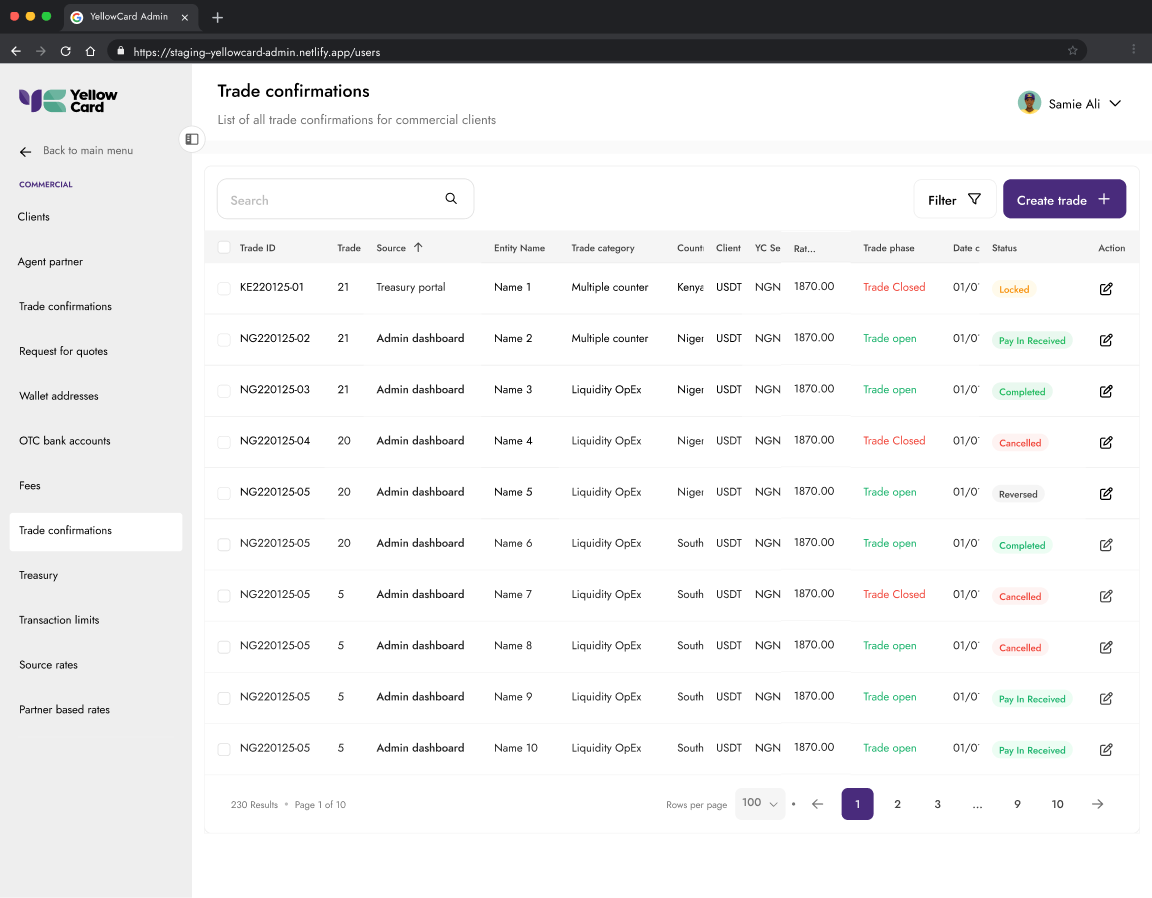
Trades were being logged on the admin dashboard but executed offline
Trades were being logged on the admin dashboard but executed offline
The solution upfront
We didn't just fix two broken experiences. We laid the foundation for one unified platform.
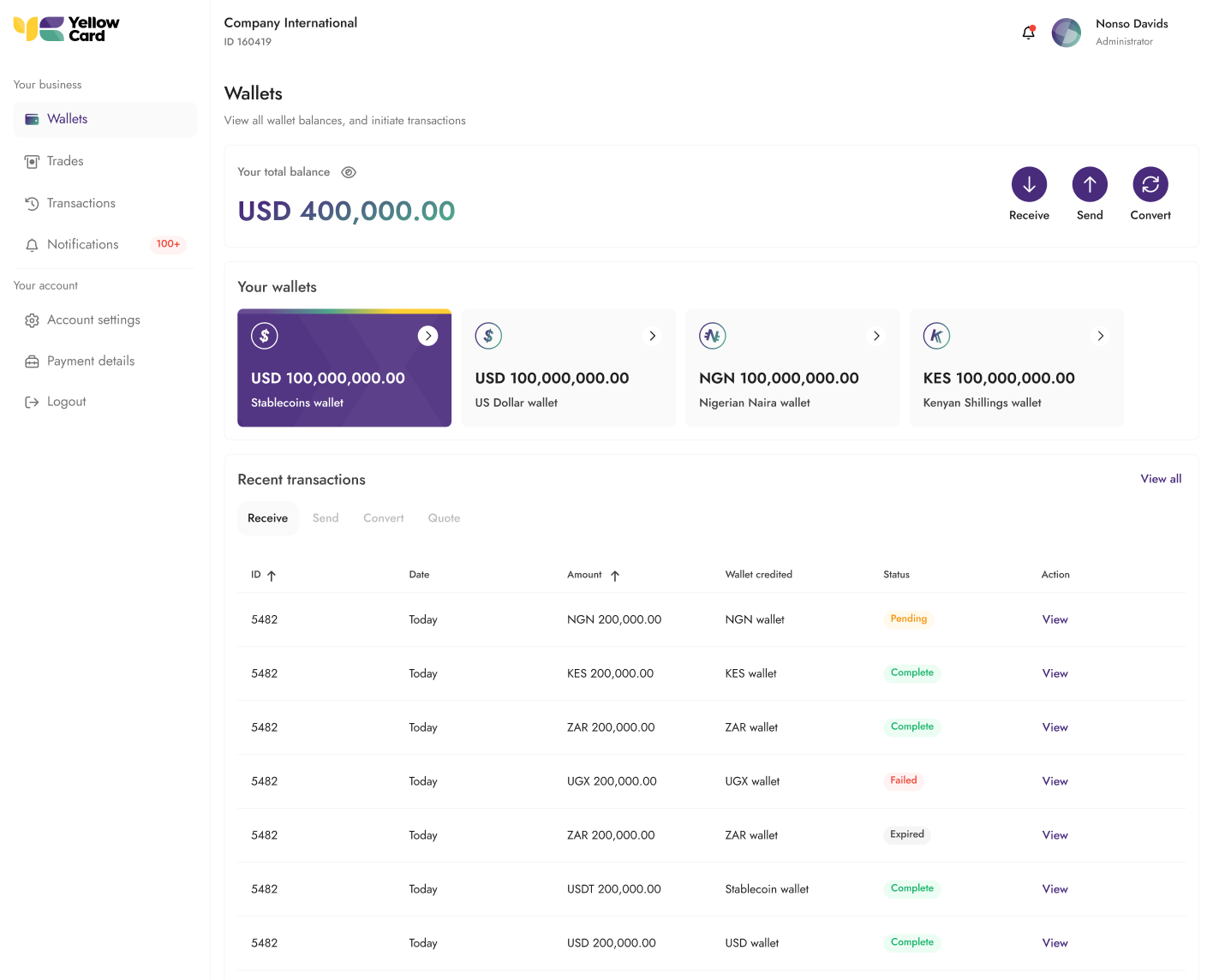
The immediate win was consolidating OTC trades into a single view, giving clients and account teams visibility and control that WhatsApp could never offer.
Alongside that, we rebuilt the Partner Portal so performing transactions and managing operations actually felt intuitive.
The bigger goal is one portal for both OTC and API clients. We're not there yet, but the first and hardest step is done. We've defined what it should look like, how it should work, and built the foundation it will grow on.
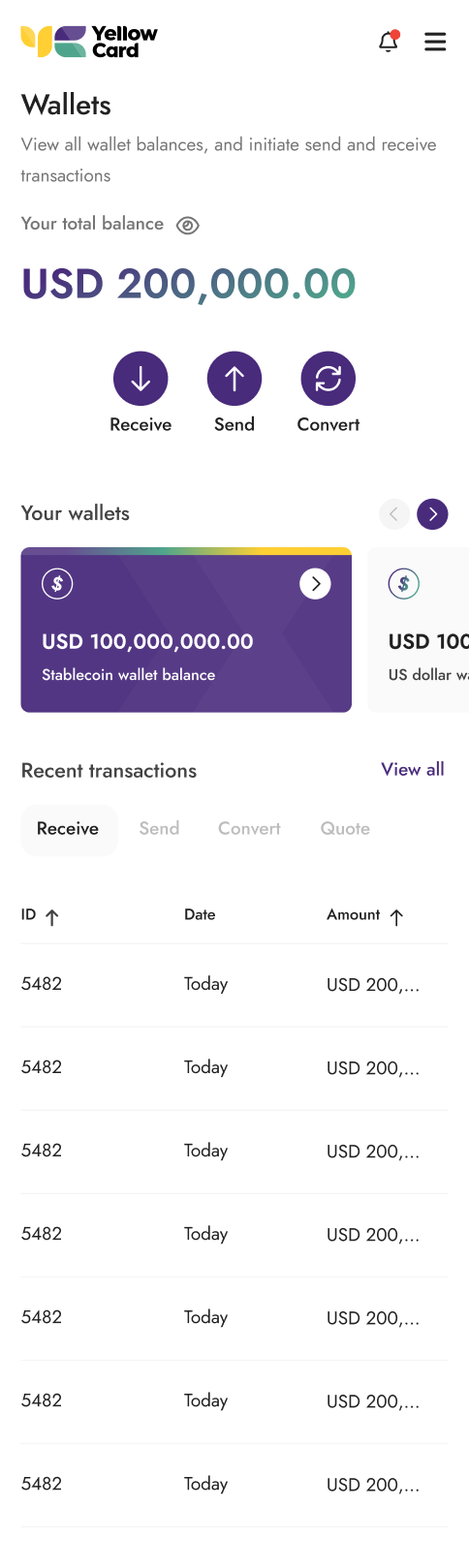
What our Treasury and OTC clients see
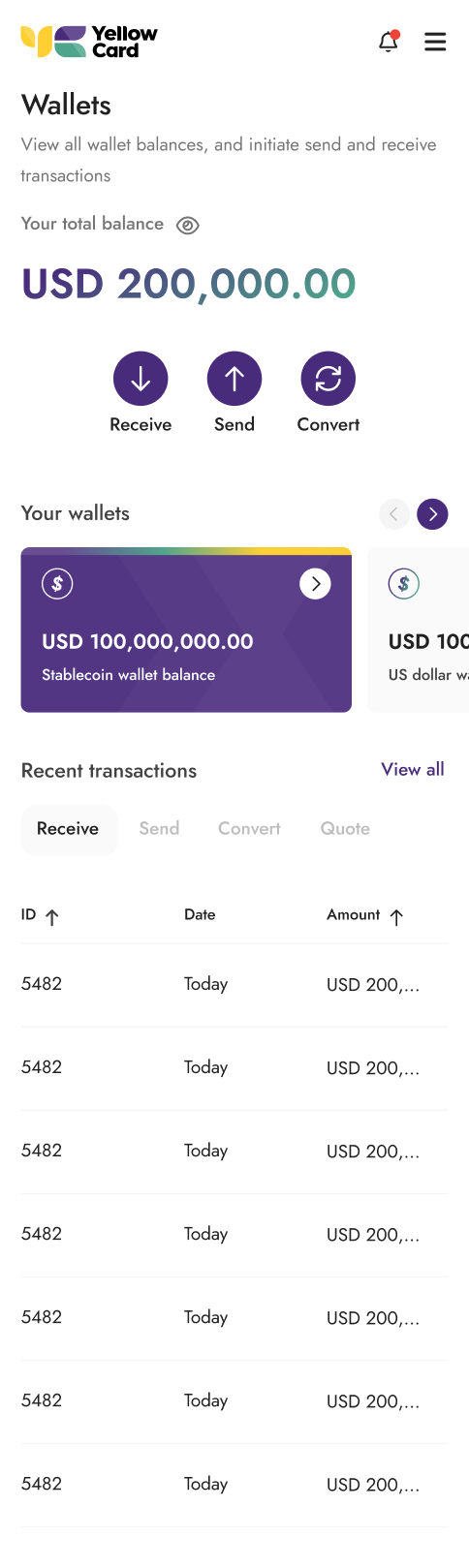
What our API clients and partners should see
How i arrived at the solution
The first thing I did was get alignment before touching any screens.
I met with engineering, product, and members of the leadership team to pressure-test the direction early. The goal was simple, make sure what we were building would actually solve the right problem for the business. That led to several iterations before we landed on a direction everyone believed in.
Along the way I ran quick validation sessions with the treasury and security teams. Not formal research, just enough to sense-check assumptions and catch anything that could create compliance or operational issues down the line. Both teams had strict requirements that shaped the design significantly.
For the transaction experience specifically, I sat down with the design and product team to map the end-to-end journey for two distinct users, a treasury client managing OTC trades, and an account holder on the partner side. That session gave us a shared understanding of what the experience needed to feel like from start to finish.
We started with the foundation: send and receive. Getting those two flows right first created the room to layer in convert and request for quote later without breaking what was already working
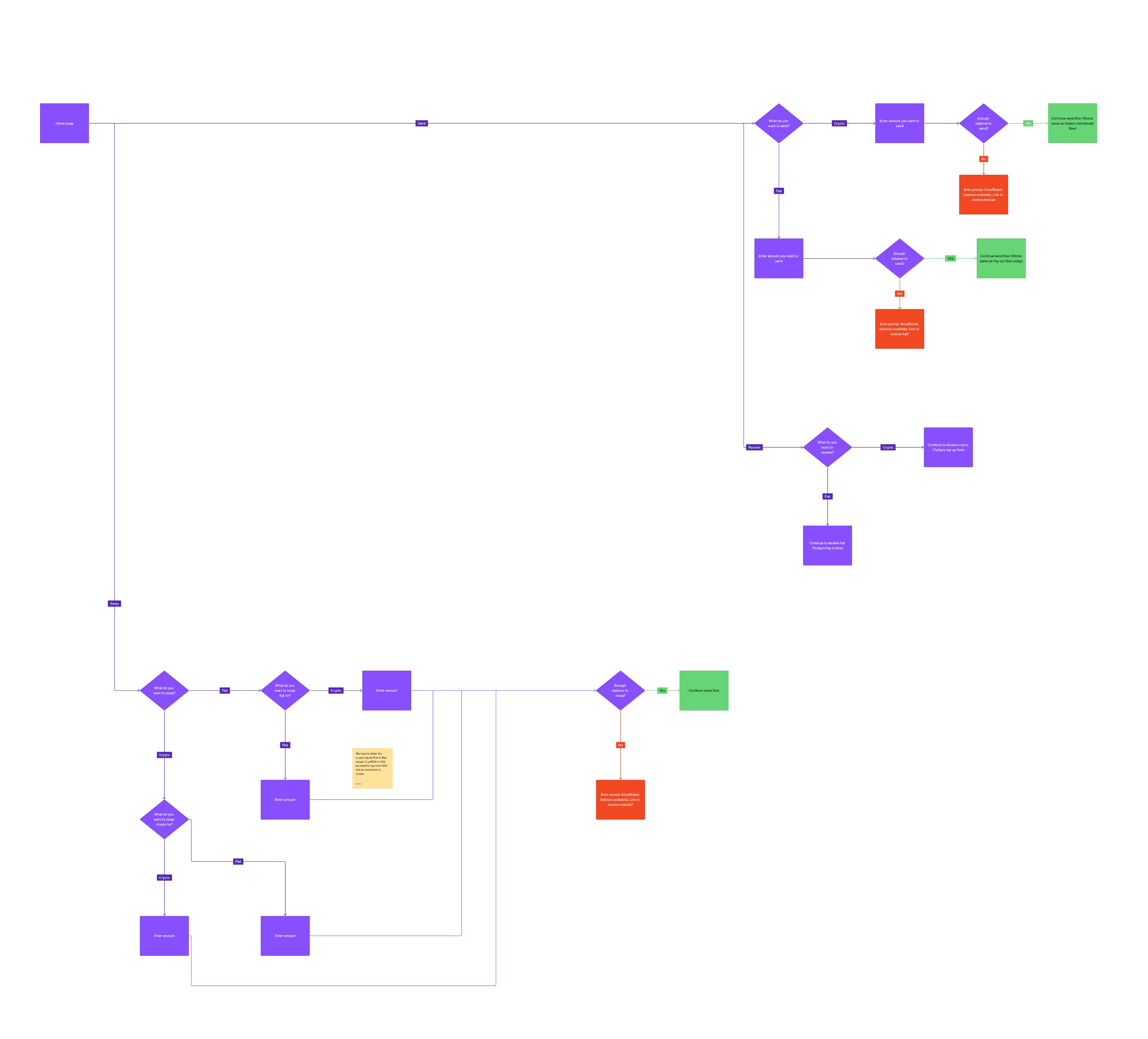
Treasury clients user flow
API client user flow
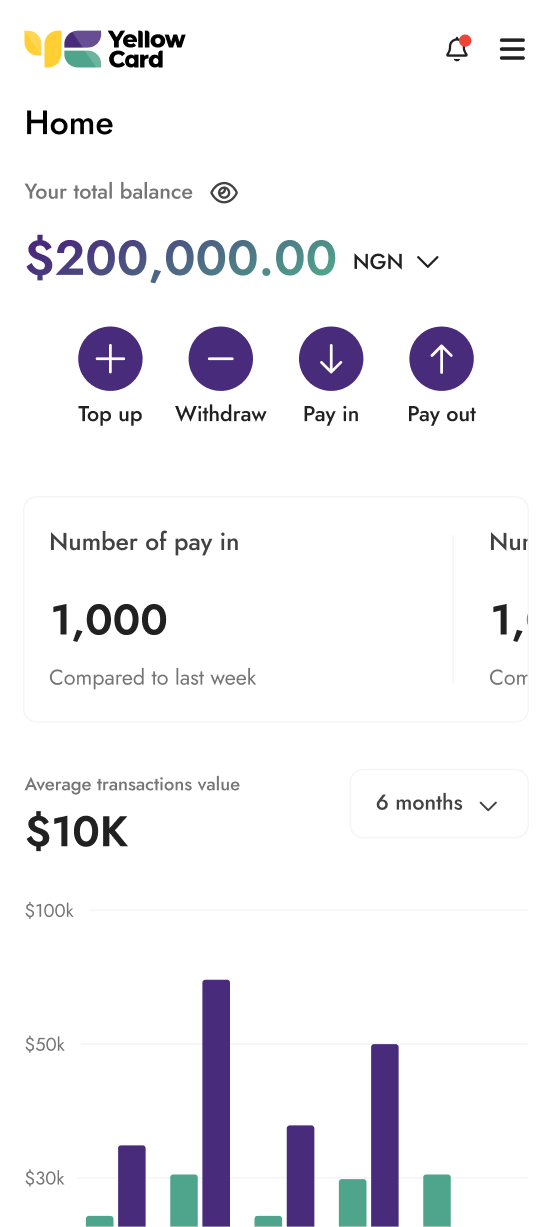
After several iterations and feedback sessions we saw the need for a home page for a centralised view
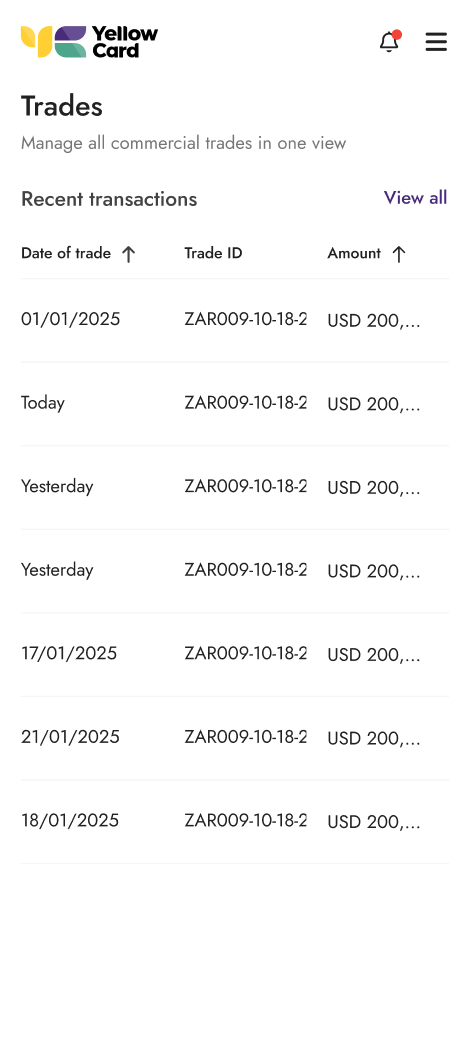
While we grew into full automation, we had a page to accommodate offline trades. This was also done to help drive adoption
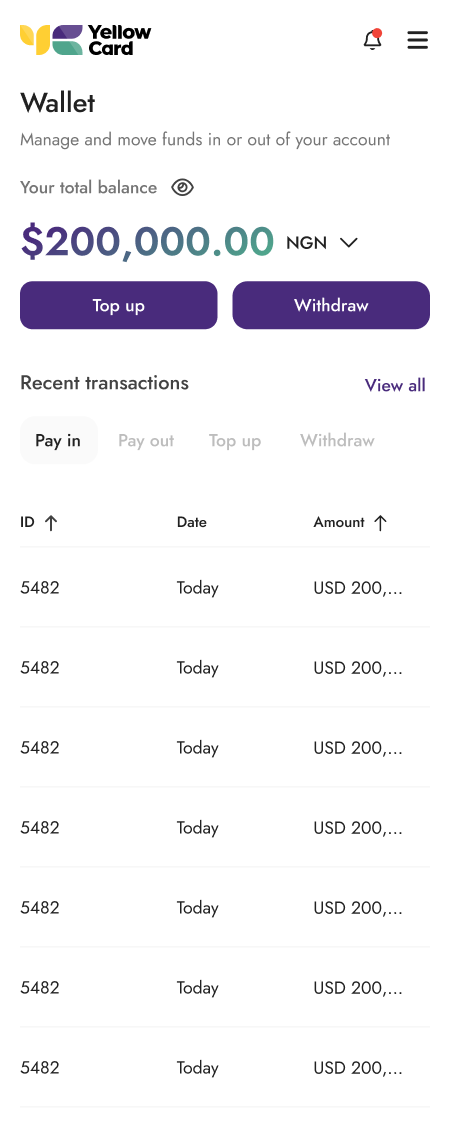
First iteration of the wallets view Highlighting Top and Withdraw transactions
The hardest moment wasn't a design problem. It was a clarity problem.
Custom wallet permissions had no clear owner. The PM didn't have answers, I didn't have answers, and we were stalling. I made the call to pull custom permissions out entirely and treat it as a separate workstream. That one decision unblocked the whole project.
Treasury wanted automation. Security wanted transparency. I reframed the question, not automation versus transparency, but how do we build trust with security first and earn automation later. That became the backbone of the product roadmap.
Three things that made the difference for the final product
A transaction flow that respects your time
Large-volume transfers shouldn't feel complicated. We got OTC transactions down to two steps, fast enough that partners actually made the switch from WhatsApp.
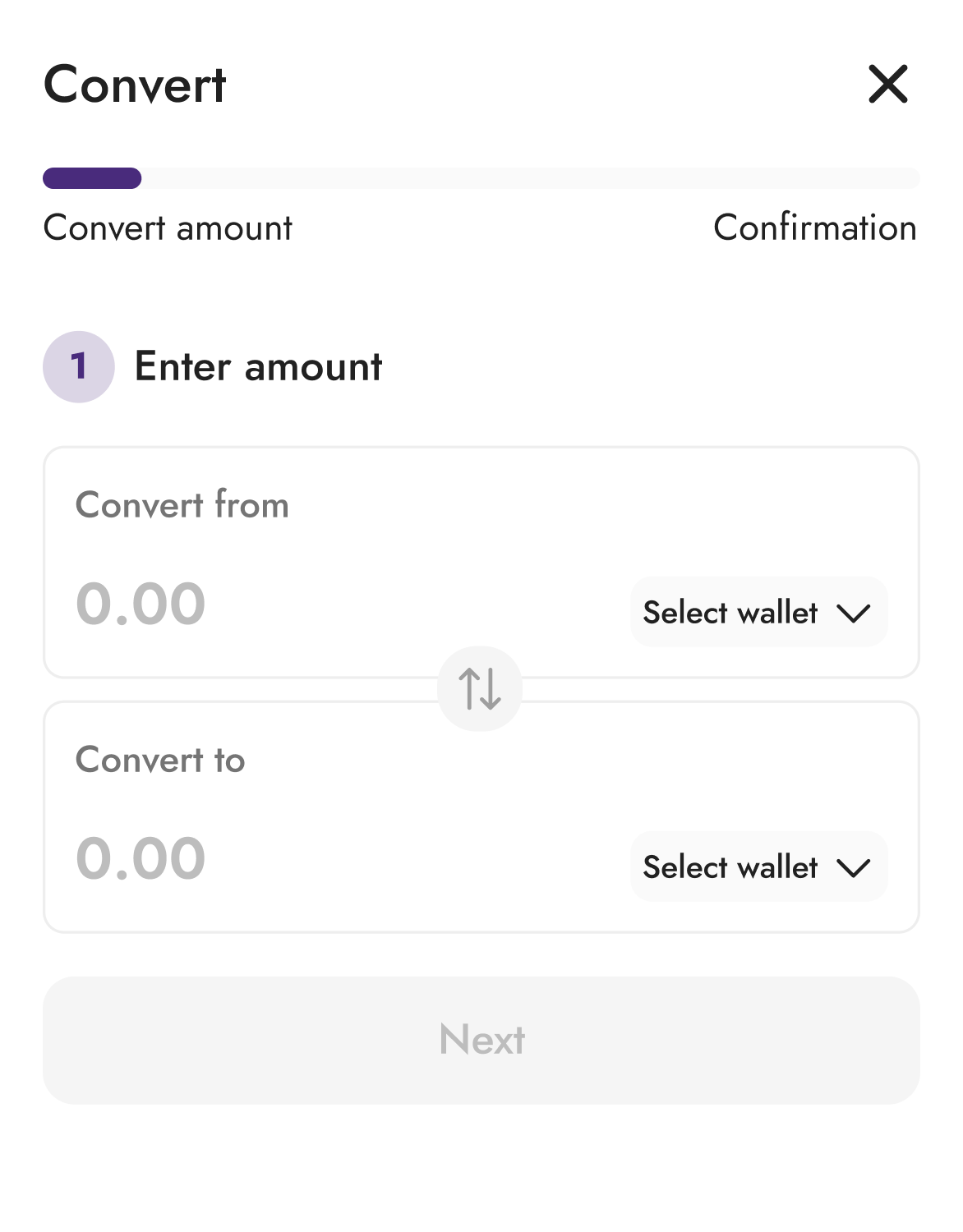
Convert from one currency to another in the fastest way possible
Multi-signature approvals that institutions can trust
Financial operators need more than a send button. We built a multi-sig approval system that gave businesses the compliance controls they need to move money at scale.
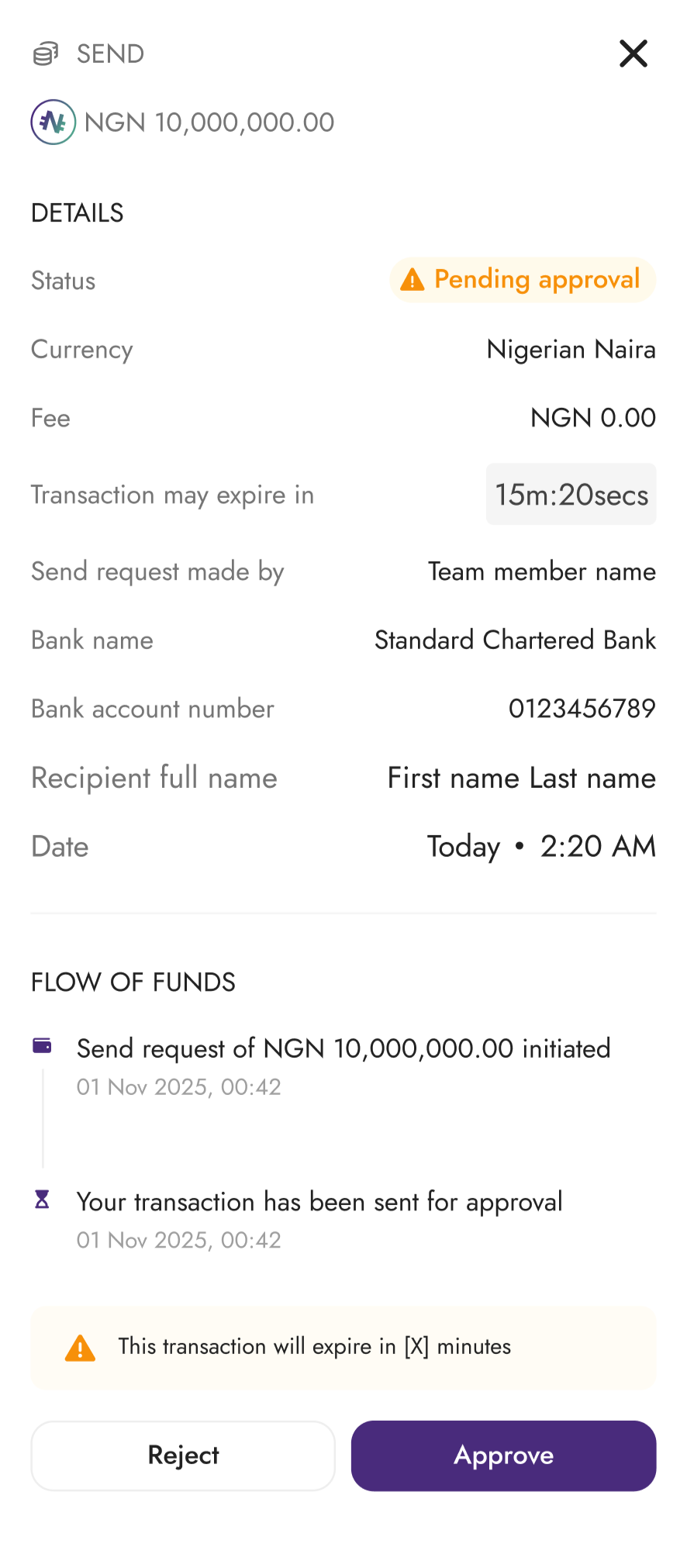
Maker-checker transaction approvals per client request
A wallet system built for complexity
Partners don't all operate the same way. Primary and custom wallet configurations meant every client could manage their funds exactly how their business required.
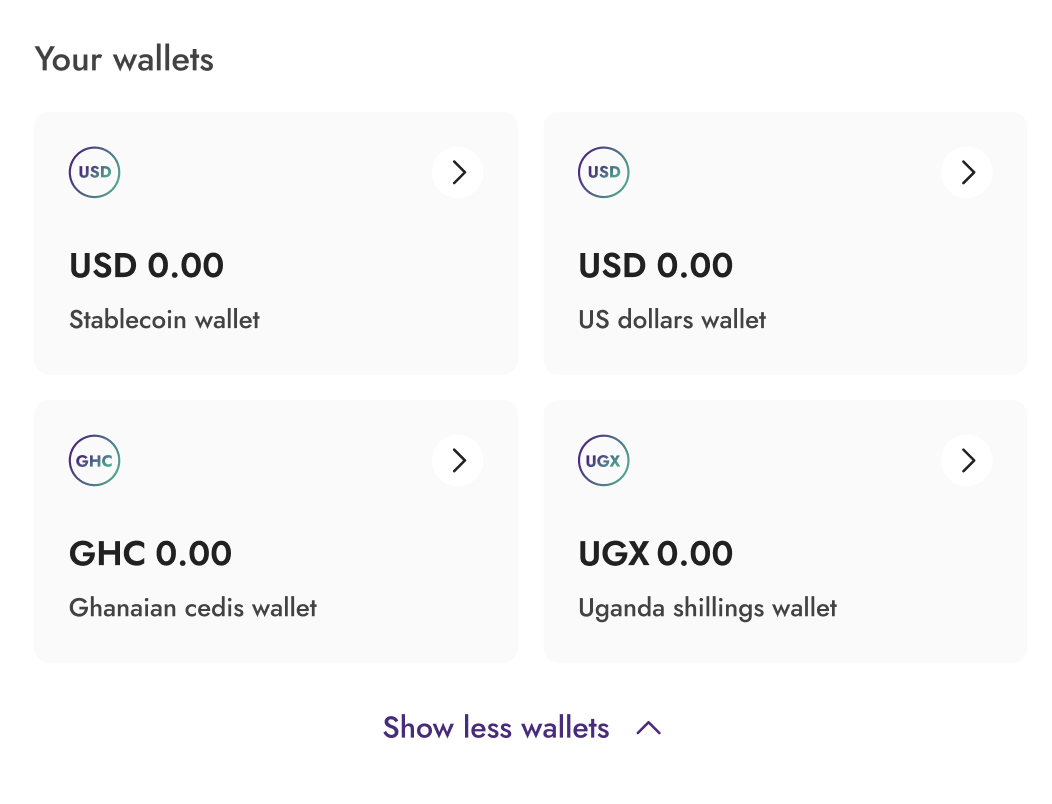
Different wallets assigned for different functions
Results and impact
The learning curve from WhatsApp to portal was smaller than anyone expected. Clients adapted naturally. That's the quiet validation you work toward.
$6B+ total trade volume at Yellowcard, the portal is the infrastructure built to support and grow that number.
5 clients fully migrated off WhatsApp.
1 unified foundation for both OTC and API clients, ready to scale.
The honest gap is SLA times. It's not a design problem but it affects the experience. We're improving.
Key learnings
This project stretched me in ways I didn't expect.
Working across treasury, security, finance and engineering taught me how complex processes actually move inside large organisations.
The biggest design lever wasn't visual, it was simplicity. Making complicated financial operations feel effortless is harder than it looks, and more valuable than almost anything else you can do for an operator.
I also learned that at this level, compliance and security aren't constraints to design around. They're part of the product. Being adaptable and open to change wasn't optional, scope shifted constantly and the ability to move with it kept the project on track.
And none of this would have been what it is without the team. The engineers, product managers, and fellow designers who challenged and shaped the work made it better at every stage.

Contact me
Let’s talk about how i can bring your product idea to life. Dudumukwu@gmail.com :)
Moving $6B+ in OTC trades off WhatsApp and unifying Yellowcard's treasury and payment infrastructure into one platform.
Yellowcard's Treasury Portal was live and generating revenue, but only for API clients. OTC clients had no product at all. Trades lived across WhatsApp, Telegram and email. Meanwhile the Partner Portal was painful to use, too many steps, no clarity, no confidence.
PS: Some process documentation and internal screens are omitted due to NDA requirements. Happy to discuss the thinking behind key decisions in detail.
ROLE
Lead Product Designer
TEAM MEMBERS
Stacey Ondimu
Product Manager
Liz Reid
Product Owner
Others
Across engineering, treasury and finance
TOOL STACK


The problem
The OTC desk was running on WhatsApp. The Partner Portal was barely usable.
Yellowcard's OTC clients were managing high-volume trades across WhatsApp, Telegram and email. No audit trail, no visibility, no central system. Account teams held everything together manually.
The Partner Portal existed but created its own problems. Too many steps to complete basic transactions. No clear navigation. Partners were losing time on operations that should have taken seconds.
The problems in a nutshell:
No centralisation
OTC trades lived across five different platforms. Nothing was connected and nothing was trackable.
No efficiency
The Partner Portal required too many steps for basic operations. Speed was a luxury partners didn't have.
No visibility
Clients had no real-time view of their transactions or trade status. Everything had to go through account teams.
No scalability
Manual OTC processes couldn't grow with the business. Every new client added more operational weight.
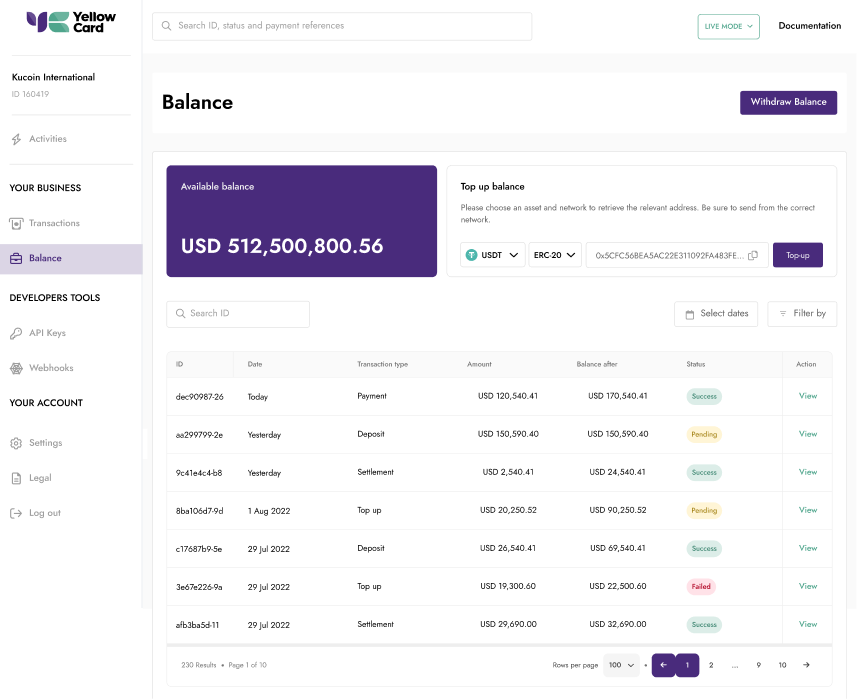


Top up and withdrawal had 2 separate mental models, and was hard to operate

Some Partners were constantly requesting for a way to manage money across several wallets. We didn’t have that yet
There was no way to download and manage transaction statements
Demand was high for other security operations like multi signature approval

Inconsistent naming across the portal.
Top up = Payment
Withdrawals = Settlement
Old partner portal
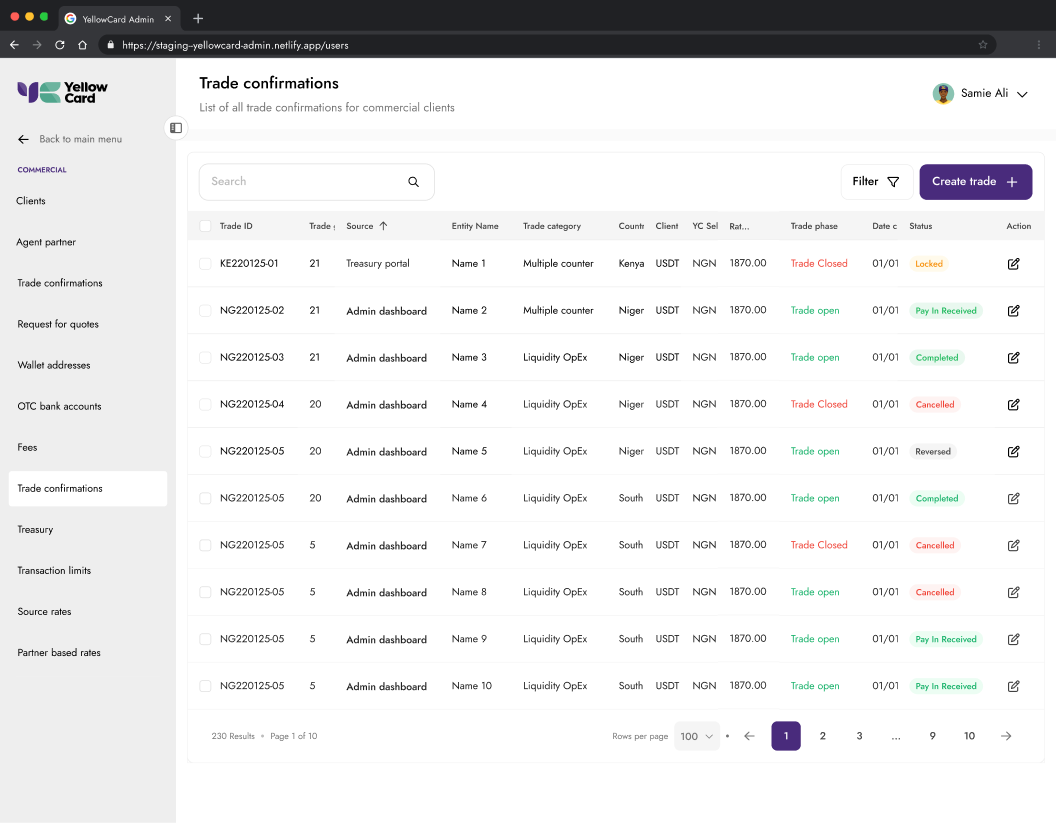
Trades were being logged on the admin dashboard but executed offline
Quick snapshot of some whatsapp group chats used for trades
The solution upfront
We didn't just fix two broken experiences. We laid the foundation for one unified platform.
The immediate win was consolidating OTC trades into a single view, giving clients and account teams visibility and control that WhatsApp could never offer.
Alongside that, we rebuilt the Partner Portal so performing transactions and managing operations actually felt intuitive.
The bigger goal is one portal for both OTC and API clients. We're not there yet, but the first and hardest step is done. We've defined what it should look like, how it should work, and built the foundation it will grow on.
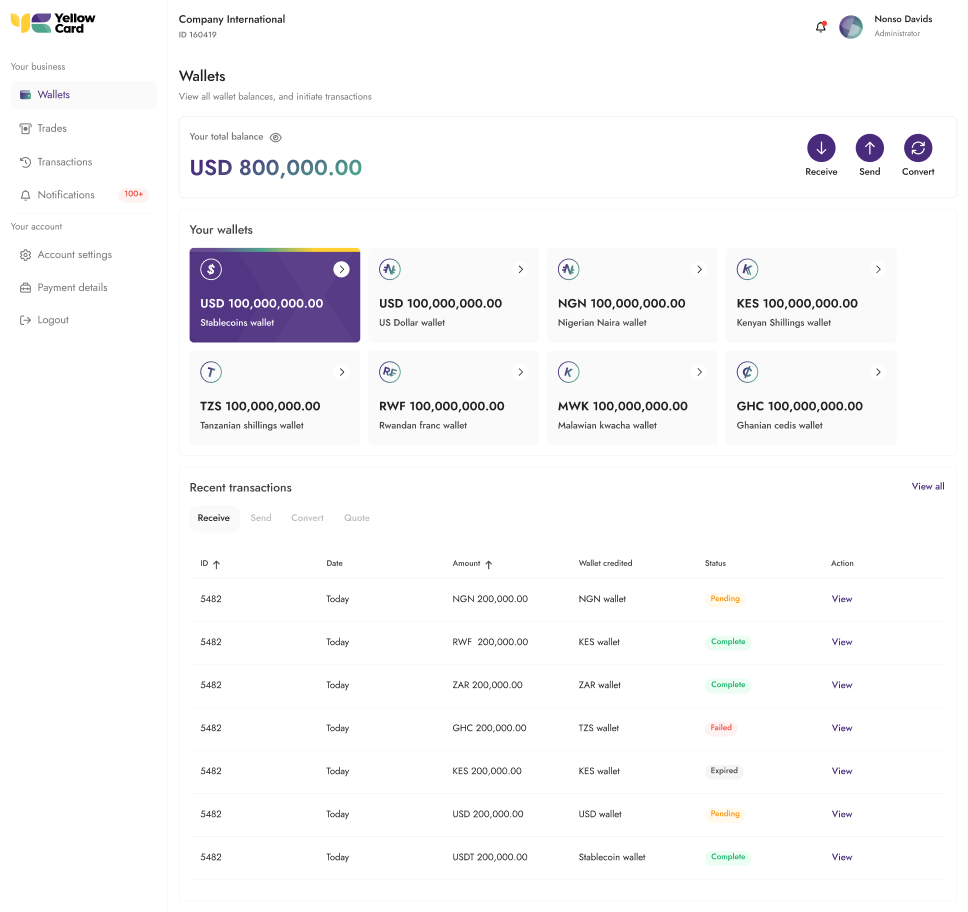
What our Treasury and OTC clients see
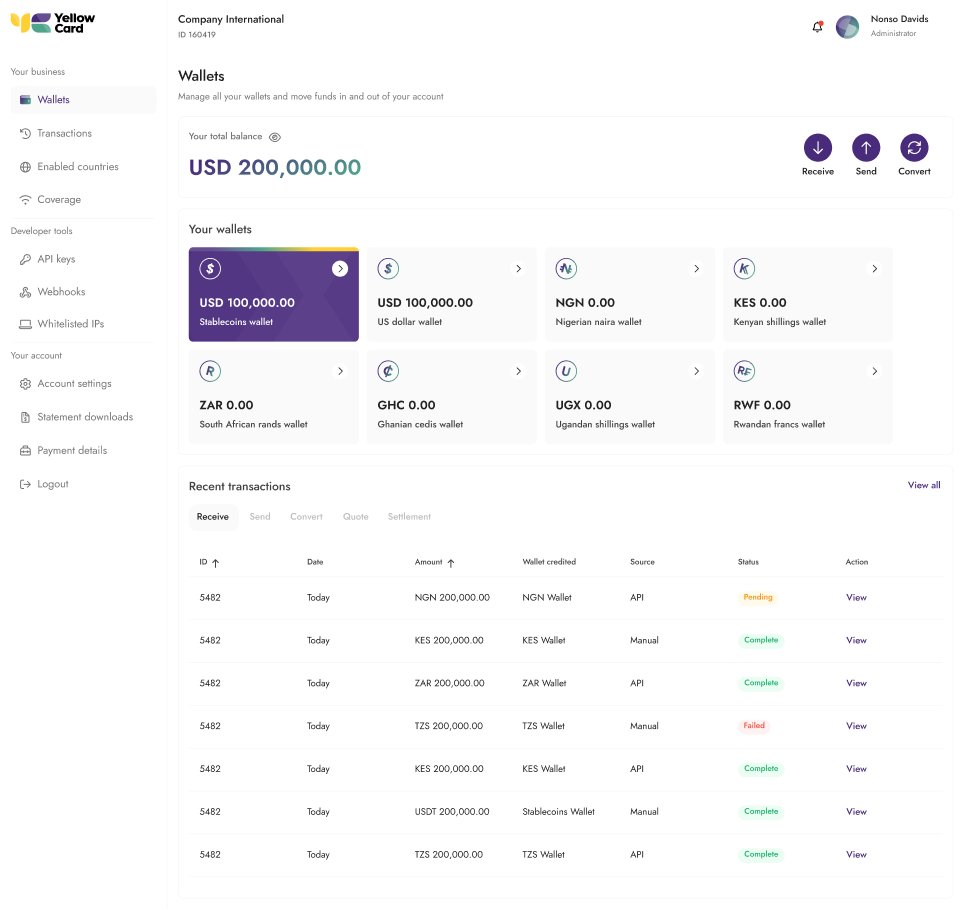
What our API clients and partners should see
How i arrived at the solution
The first thing I did was get alignment before touching any screens.
I met with engineering, product, and members of the leadership team to pressure-test the direction early. The goal was simple, make sure what we were building would actually solve the right problem for the business. That led to several iterations before we landed on a direction everyone believed in.
Along the way I ran quick validation sessions with the treasury and security teams. Not formal research, just enough to sense-check assumptions and catch anything that could create compliance or operational issues down the line. Both teams had strict requirements that shaped the design significantly.
For the transaction experience specifically, I sat down with the design and product team to map the end-to-end journey for two distinct users, a treasury client managing OTC trades, and an account holder on the partner side. That session gave us a shared understanding of what the experience needed to feel like from start to finish.
We started with the foundation: send and receive. Getting those two flows right first created the room to layer in convert and request for quote later without breaking what was already working
Treasury clients user flow
API client user flow
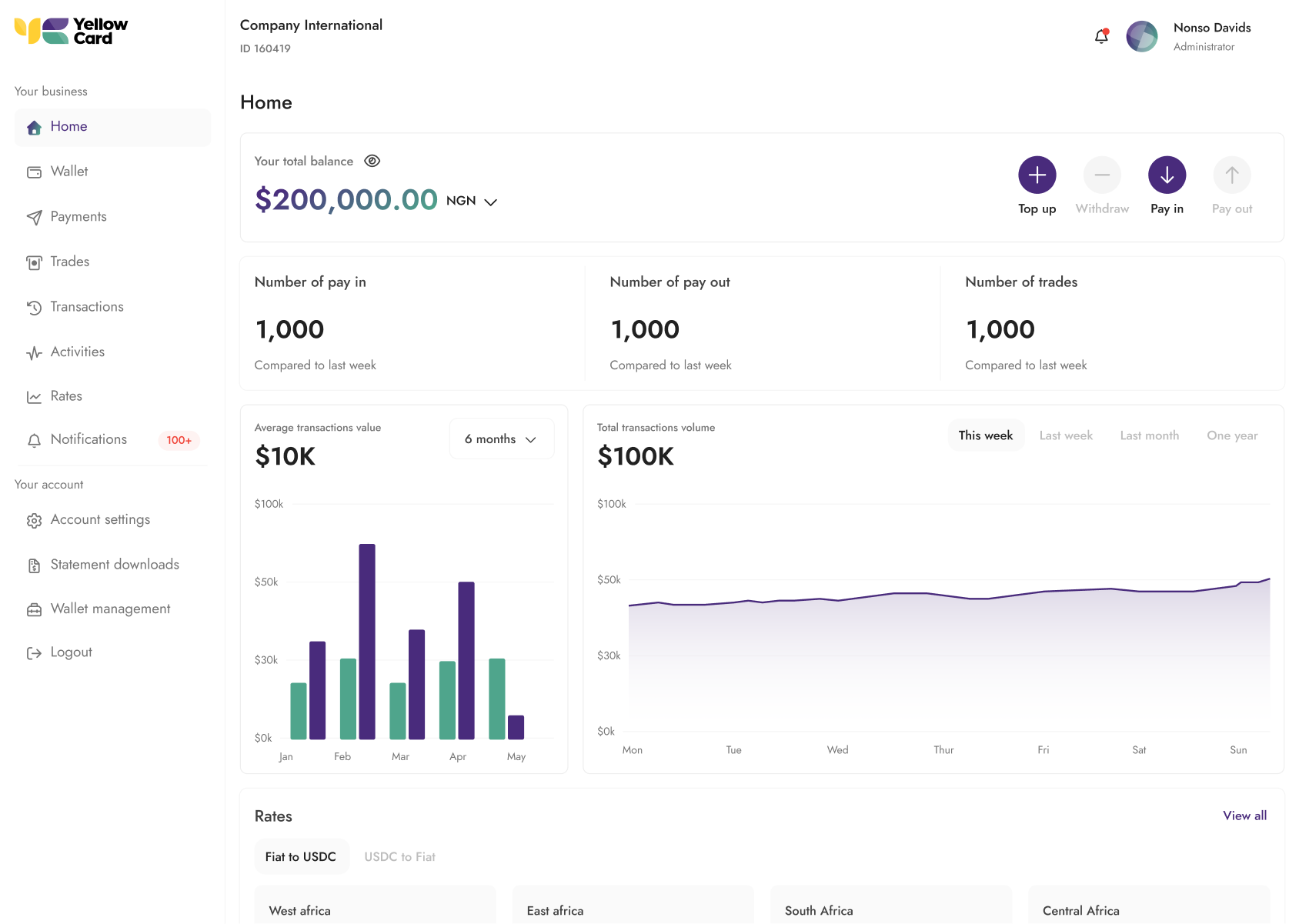
After several iterations and feedback sessions we saw the need for a home page for a centralised view
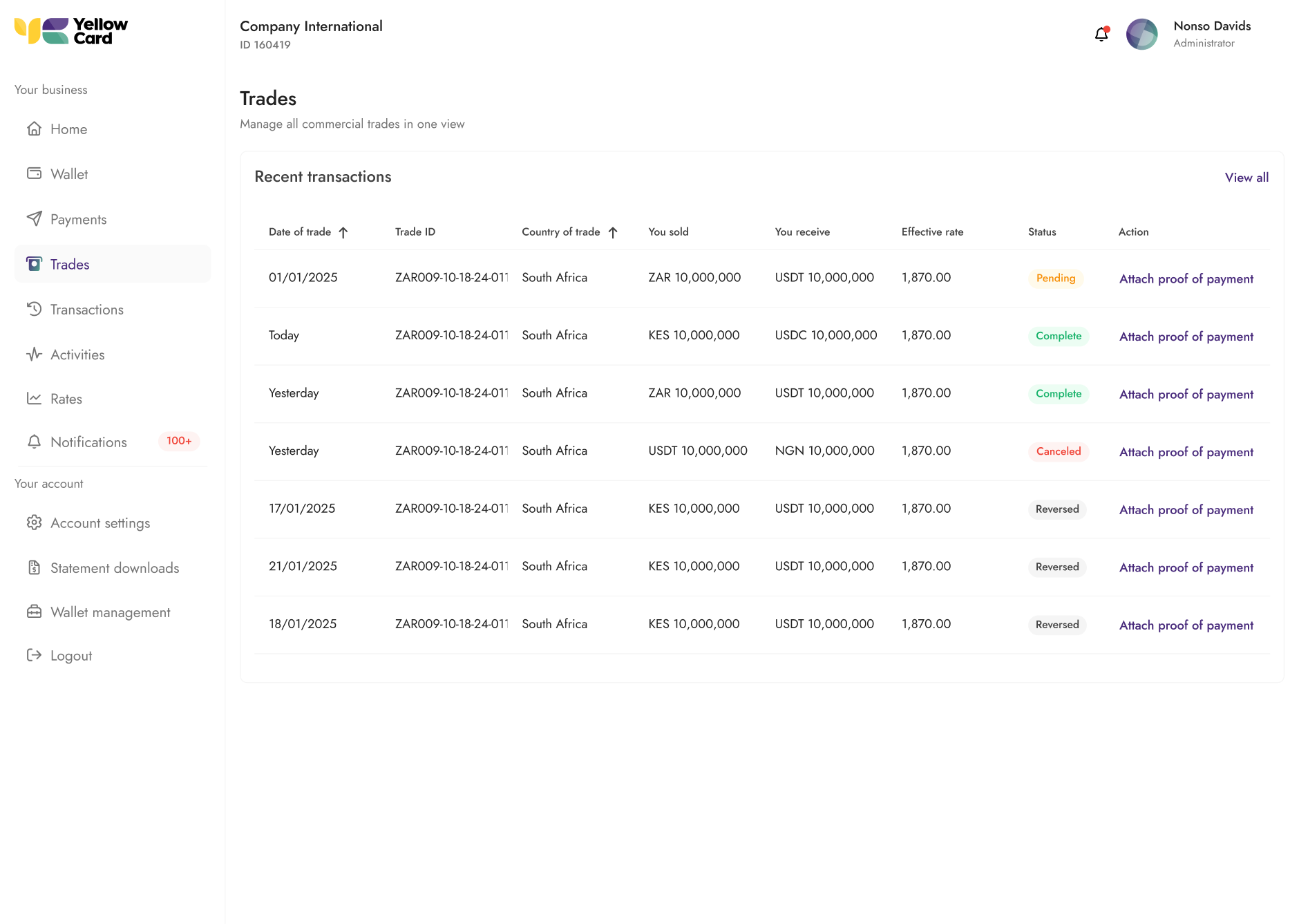
While we grew into full automation, we had a page to accommodate offline trades. This was also done to help drive adoption
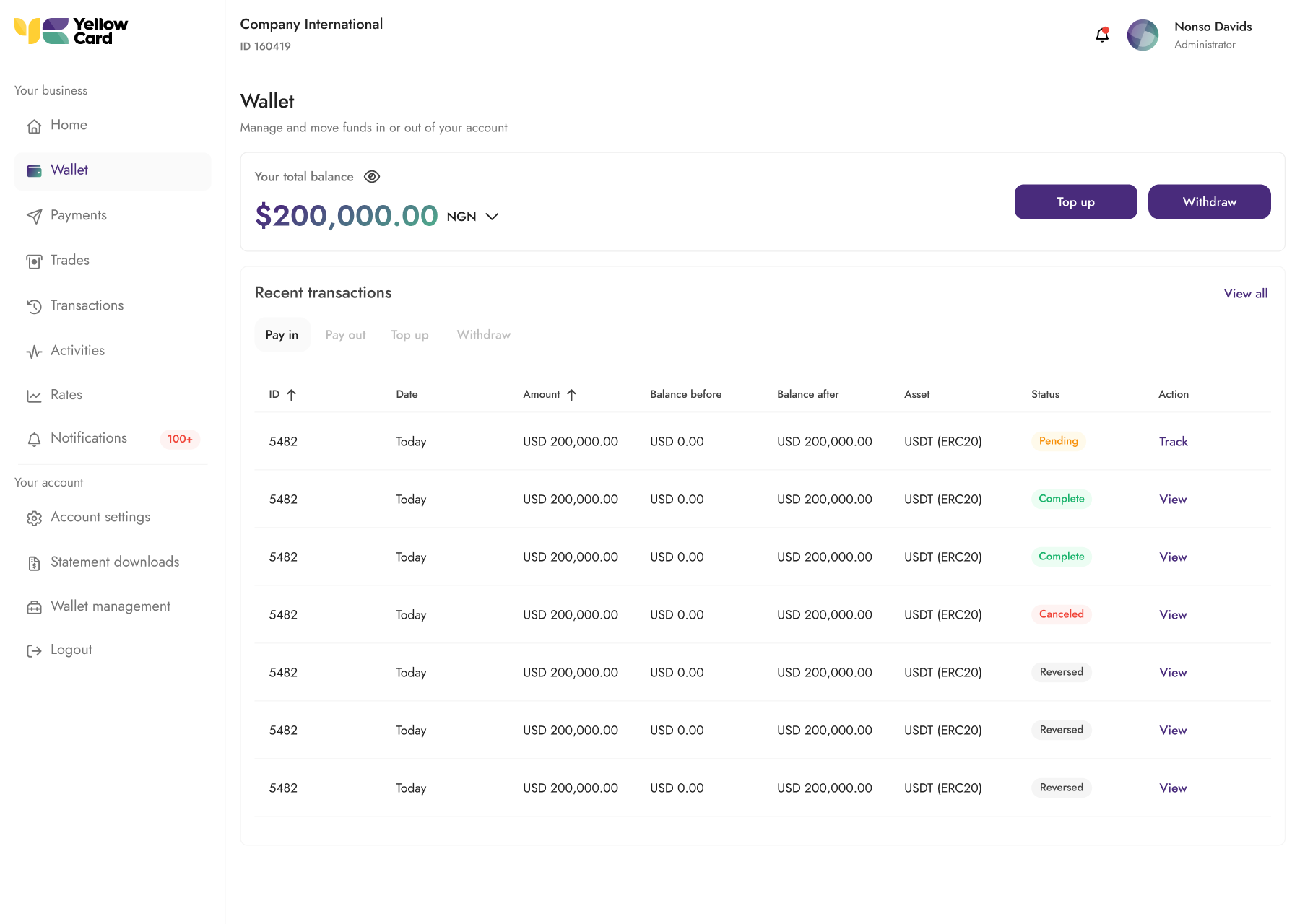
First iteration of the wallets view Highlighting Top and Withdraw transactions
The hardest moment wasn't a design problem. It was a clarity problem.
Custom wallet permissions had no clear owner. The PM didn't have answers, I didn't have answers, and we were stalling. I made the call to pull custom permissions out entirely and treat it as a separate workstream. That one decision unblocked the whole project.
Treasury wanted automation. Security wanted transparency. I reframed the question, not automation versus transparency, but how do we build trust with security first and earn automation later. That became the backbone of the product roadmap.
Three things that made the difference for the final product
A transaction flow that respects your time
Large-volume transfers shouldn't feel complicated. We got OTC transactions down to two steps, fast enough that partners actually made the switch from WhatsApp.
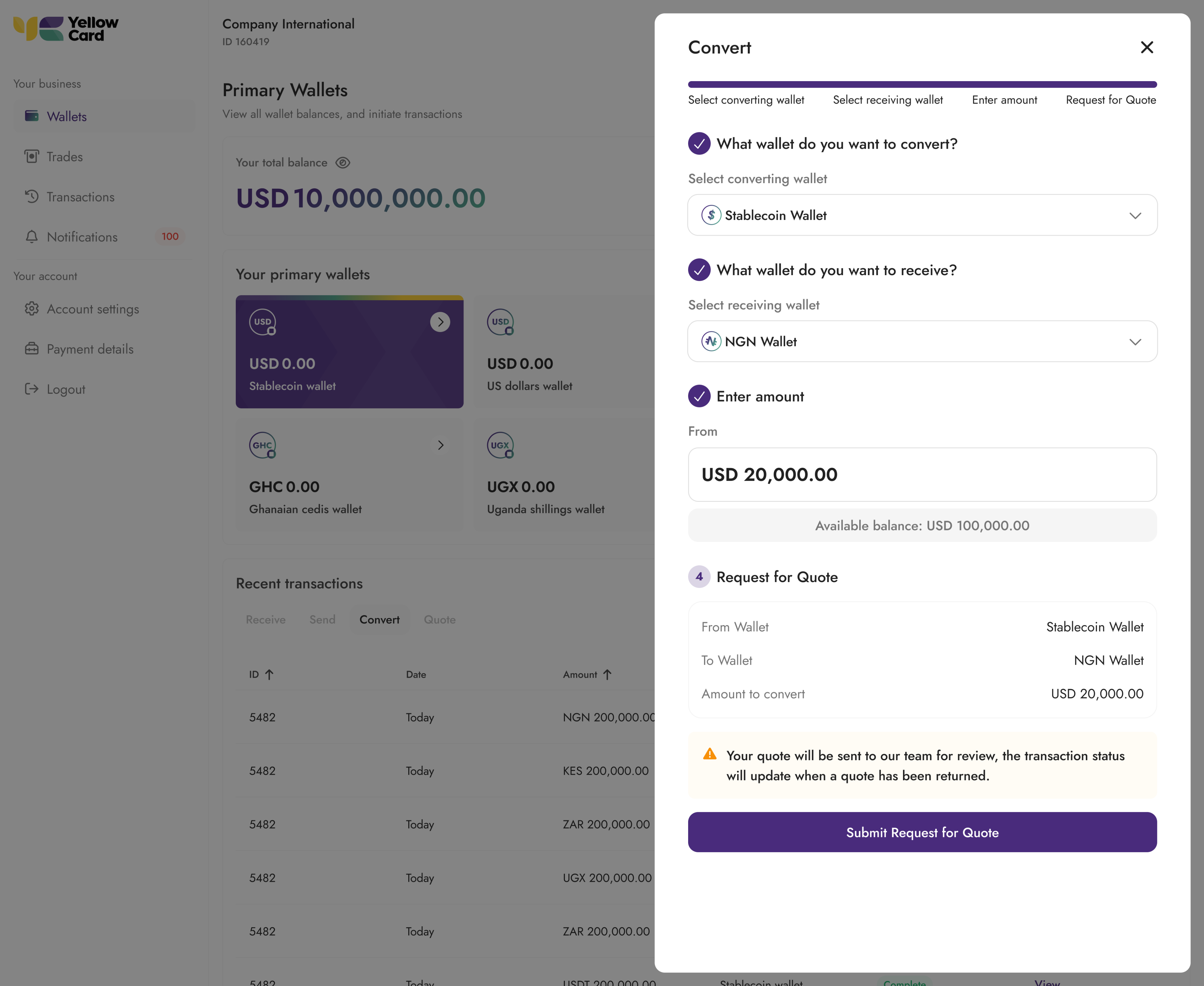
Convert from one currency to another in the fastest way possible
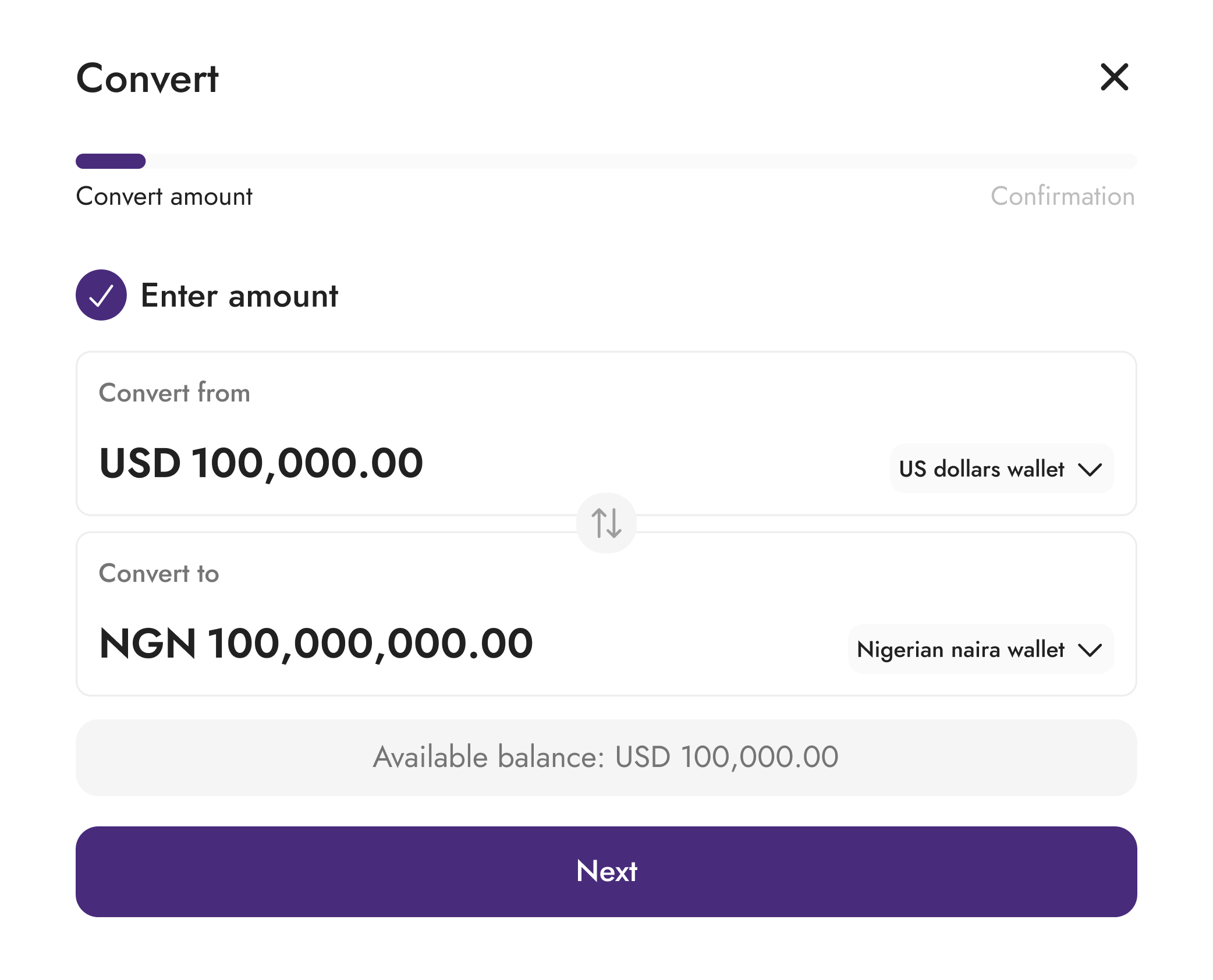
Convert from one currency to another in the fastest way possible
Multi-signature approvals that institutions can trust
Financial operators need more than a send button. We built a multi-sig approval system that gave businesses the compliance controls they need to move money at scale.
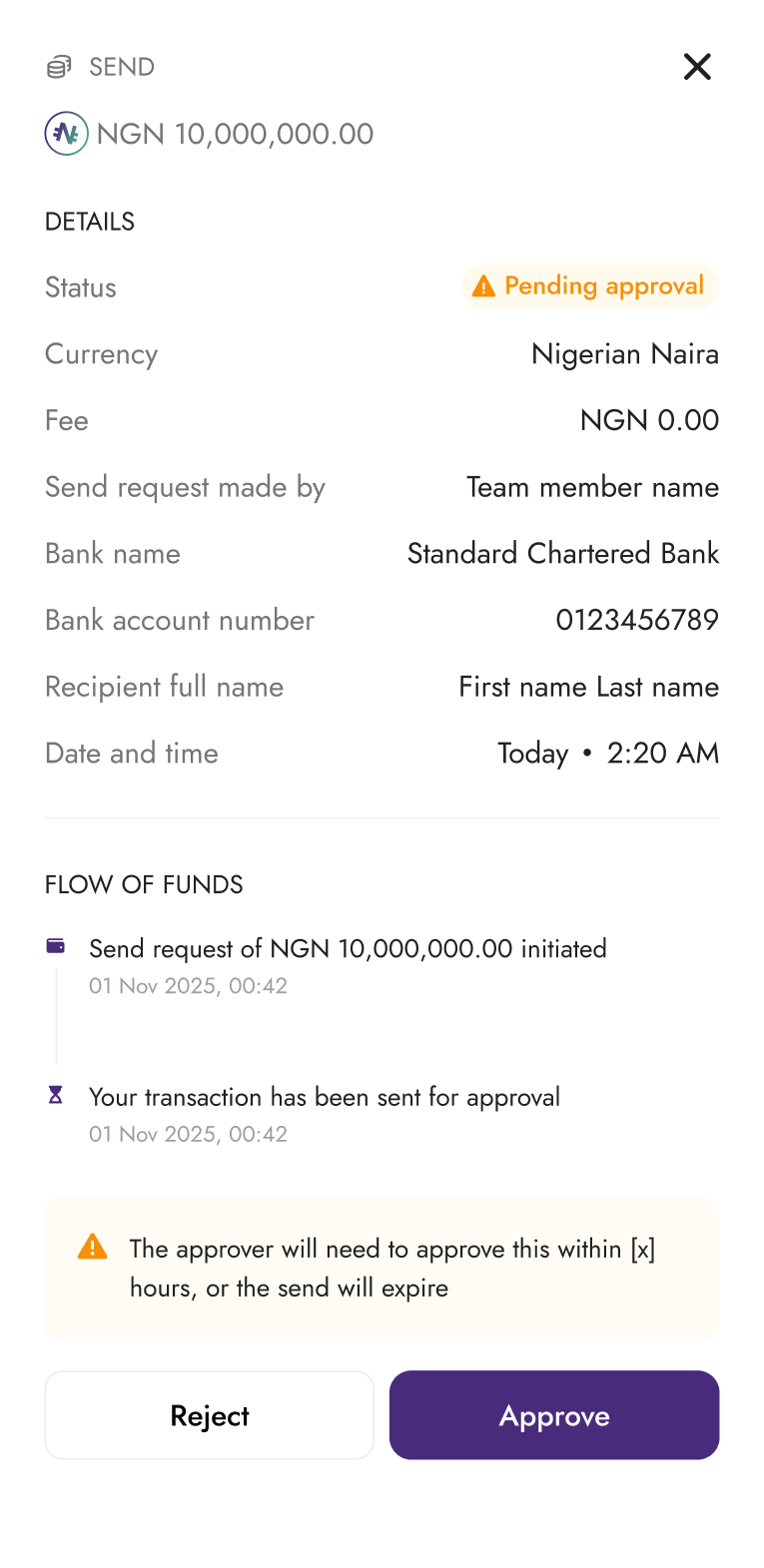
Maker-checker transaction approvals per client request
A wallet system built for complexity
Partners don't all operate the same way. Primary and custom wallet configurations meant every client could manage their funds exactly how their business required.
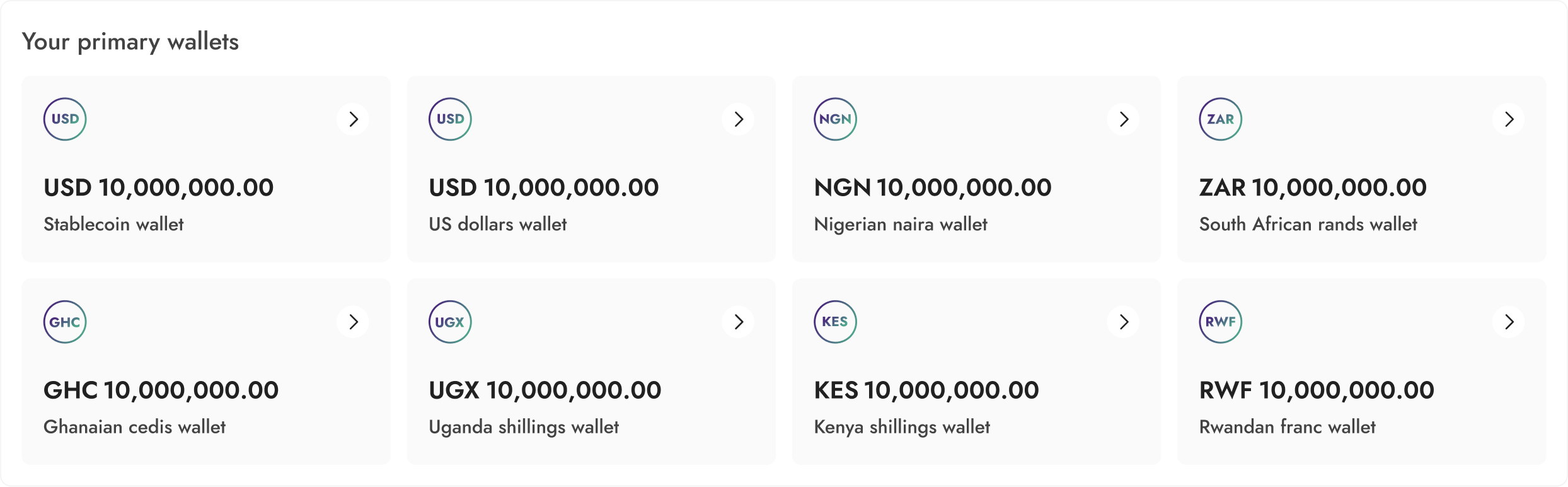
Different wallets assigned for different functions
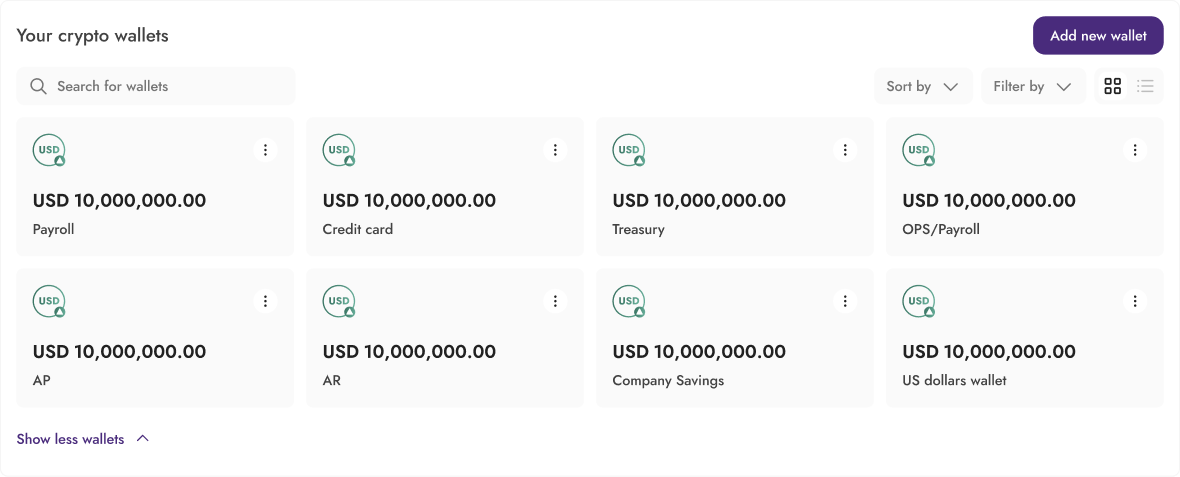
Different wallets assigned for different functions
Key learnings
This project stretched me in ways I didn't expect.
Working across treasury, security, finance and engineering taught me how complex processes actually move inside large organisations.
The biggest design lever wasn't visual, it was simplicity. Making complicated financial operations feel effortless is harder than it looks, and more valuable than almost anything else you can do for an operator.
I also learned that at this level, compliance and security aren't constraints to design around. They're part of the product. Being adaptable and open to change wasn't optional, scope shifted constantly and the ability to move with it kept the project on track.
And none of this would have been what it is without the team. The engineers, product managers, and fellow designers who challenged and shaped the work made it better at every stage.
Contact me
Let’s talk about how i can bring your product idea to life. Dudumukwu@gmail.com :)
Moving $6B+ in OTC trades off WhatsApp and unifying Yellowcard's treasury and payment infrastructure into one platform.
Yellowcard's Treasury Portal was live and generating revenue, but only for API clients. OTC clients had no product at all. Trades lived across WhatsApp, Telegram and email. Meanwhile the Partner Portal was painful to use, too many steps, no clarity, no confidence.
PS: Some process documentation and internal screens are omitted due to NDA requirements. Happy to discuss the thinking behind key decisions in detail.
ROLE
Lead Product Designer
TEAM MEMBERS
Stacey Ondimu
Product Manager
Liz Reid
Product Owner
Others
Across engineering, treasury and finance
TOOL STACK
The problem
The OTC desk was running on WhatsApp. The Partner Portal was barely usable.
Yellowcard's OTC clients were managing high-volume trades across WhatsApp, Telegram and email. No audit trail, no visibility, no central system. Account teams held everything together manually and through our internal admin portal.
The Partner Portal existed but created its own problems. Too many steps to complete basic transactions. No clear navigation. Partners were losing time on operations that should have taken seconds.
The problems in a nutshell:
No centralisation
OTC trades lived across five different platforms. Nothing was connected and nothing was trackable.
No efficiency
The Partner Portal required too many steps for basic operations. Speed was a luxury partners didn't have.
No visibility
Clients had no real-time view of their transactions or trade status. Everything had to go through account teams.
No scalability
Manual OTC processes couldn't grow with the business. Every new client added more operational weight.
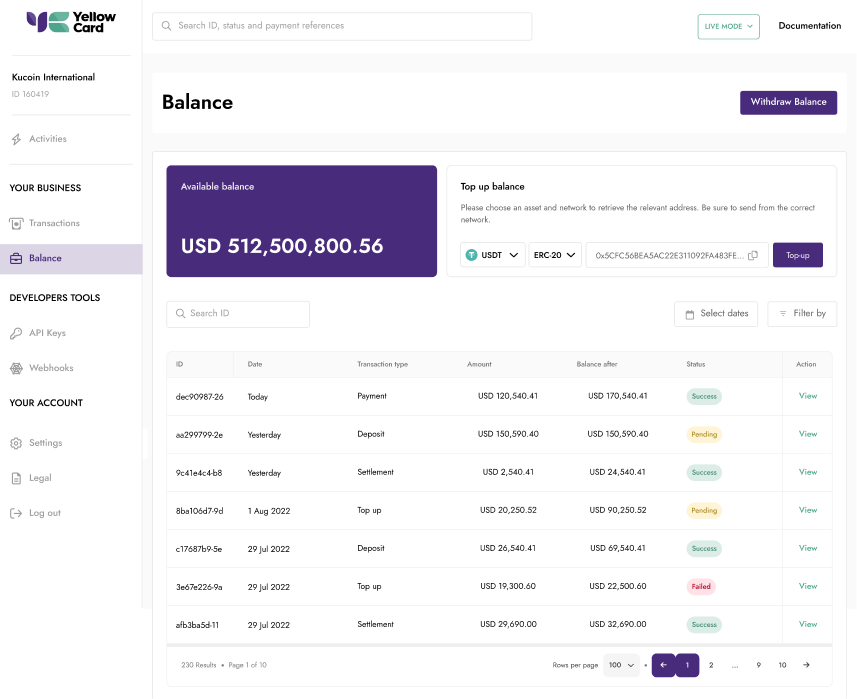
Top up and withdrawal had 2 separate mental models, and was hard to operate
Some Partners were constantly requesting for a way to manage money across several wallets. We didn’t have that yet
There was no way to download and manage transaction statements
Demand was high for other security operations like multi signature approval
Inconsistent naming across the portal.
Top up = Payment
Withdrawals = Settlement
Old partner portal
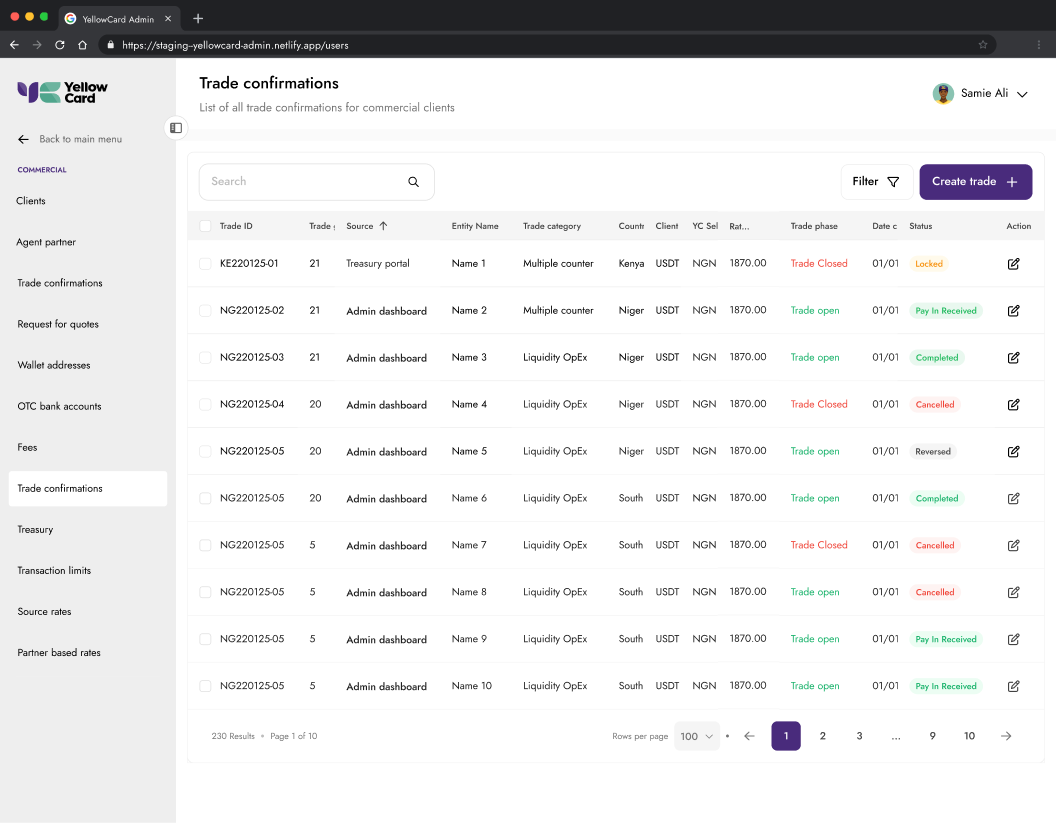
Trades were being logged on the admin dashboard but executed offline
Quick snapshot of some whatsapp group chats used for trades
The solution upfront
We didn't just fix two broken experiences. We laid the foundation for one unified platform.
The immediate win was consolidating OTC trades into a single view, giving clients and account teams visibility and control that WhatsApp could never offer.
Alongside that, we rebuilt the Partner Portal so performing transactions and managing operations actually felt intuitive.
The bigger goal is one portal for both OTC and API clients. We're not there yet, but the first and hardest step is done. We've defined what it should look like, how it should work, and built the foundation it will grow on.
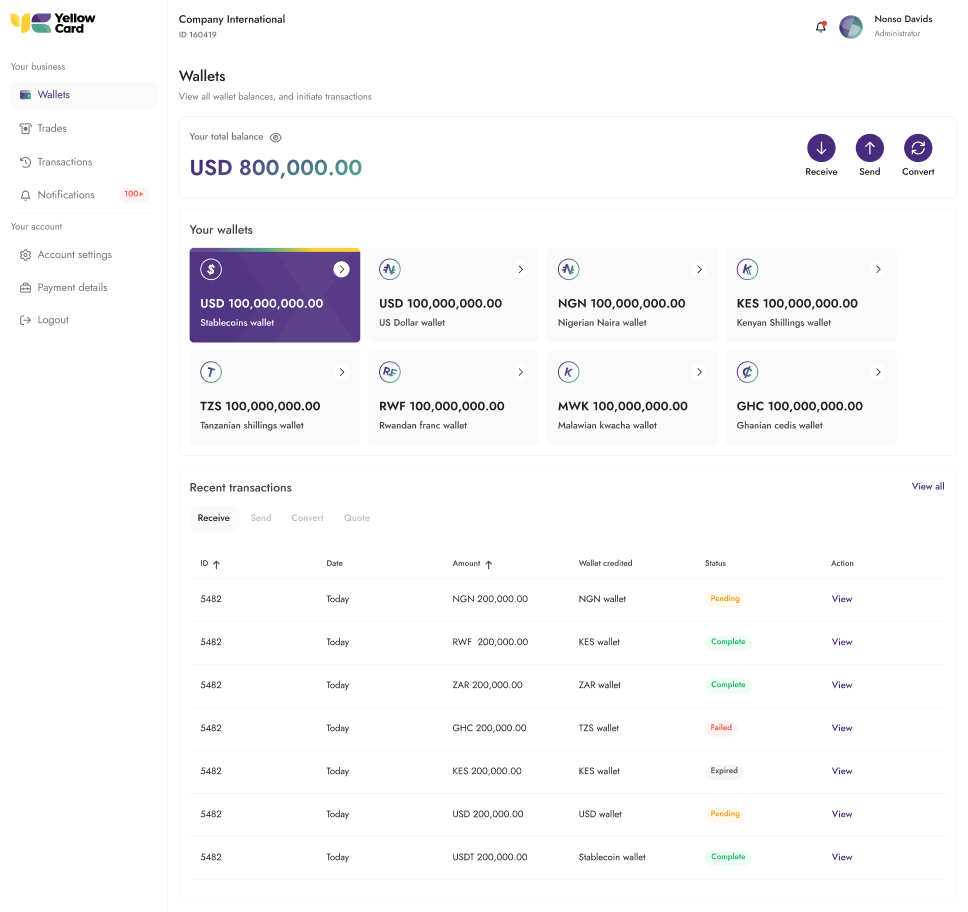
What our Treasury and OTC clients see
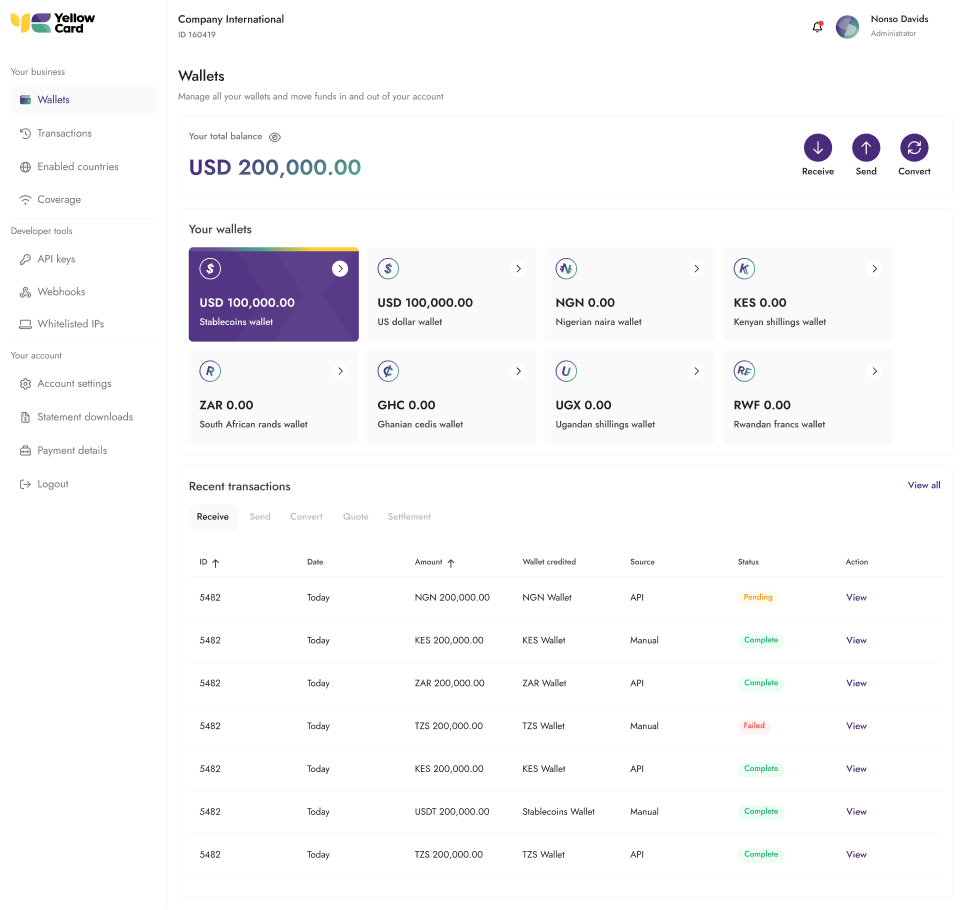
What our API clients and partners should see
How i arrived at the solution
The first thing I did was get alignment before touching any screens.
I met with engineering, product, and members of the leadership team to pressure-test the direction early. The goal was simple, make sure what we were building would actually solve the right problem for the business. That led to several iterations before we landed on a direction everyone believed in.
Along the way I ran quick validation sessions with the treasury and security teams. Not formal research, just enough to sense-check assumptions and catch anything that could create compliance or operational issues down the line. Both teams had strict requirements that shaped the design significantly.
For the transaction experience specifically, I sat down with the design and product team to map the end-to-end journey for two distinct users, a treasury client managing OTC trades, and an account holder on the partner side. That session gave us a shared understanding of what the experience needed to feel like from start to finish.
We started with the foundation: send and receive. Getting those two flows right first created the room to layer in convert and request for quote later without breaking what was already working
Treasury clients user flow
API client user flow
Wallets brainstorming session
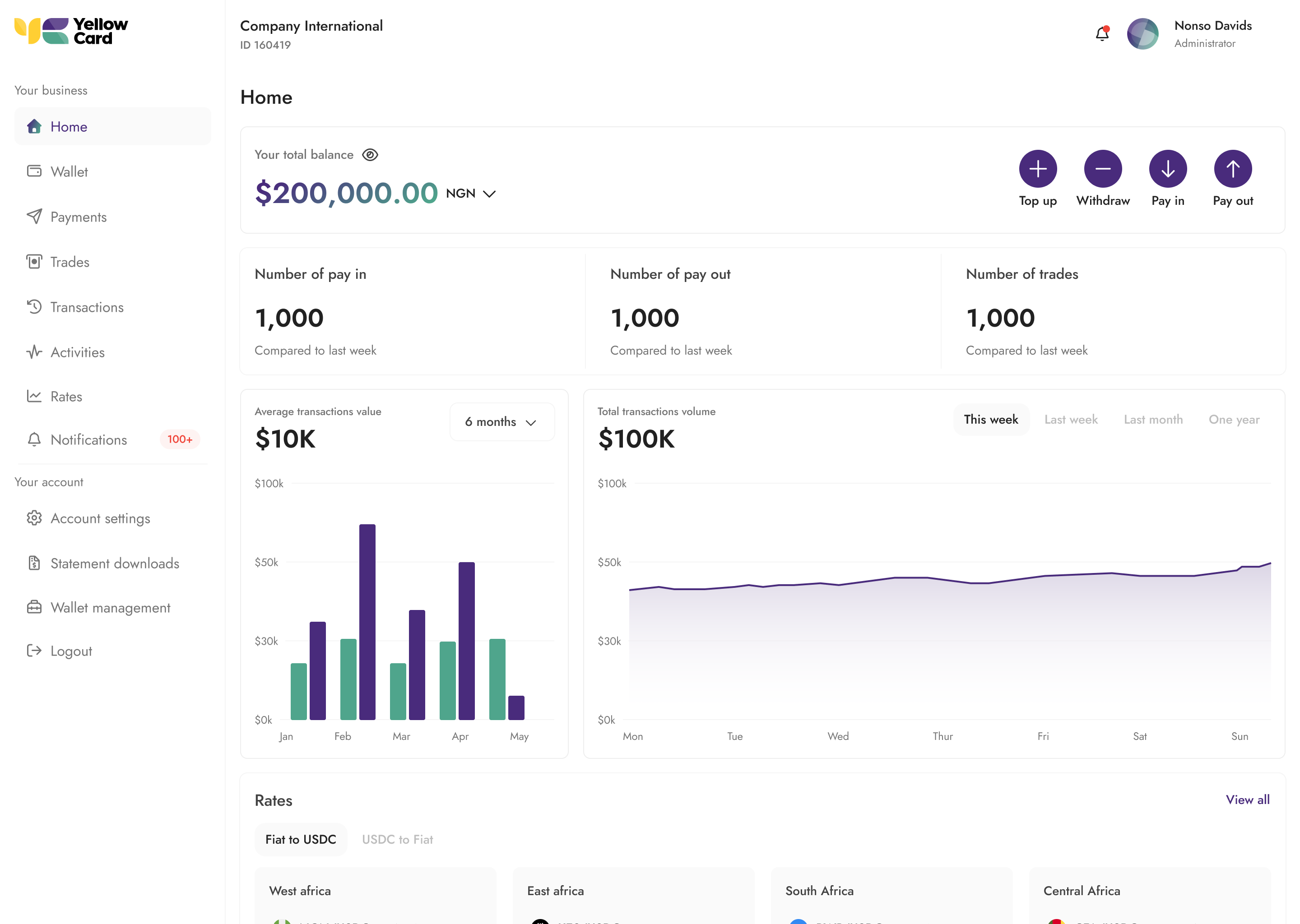
After several iterations and feedback sessions we saw the need for a home page for a centralised view
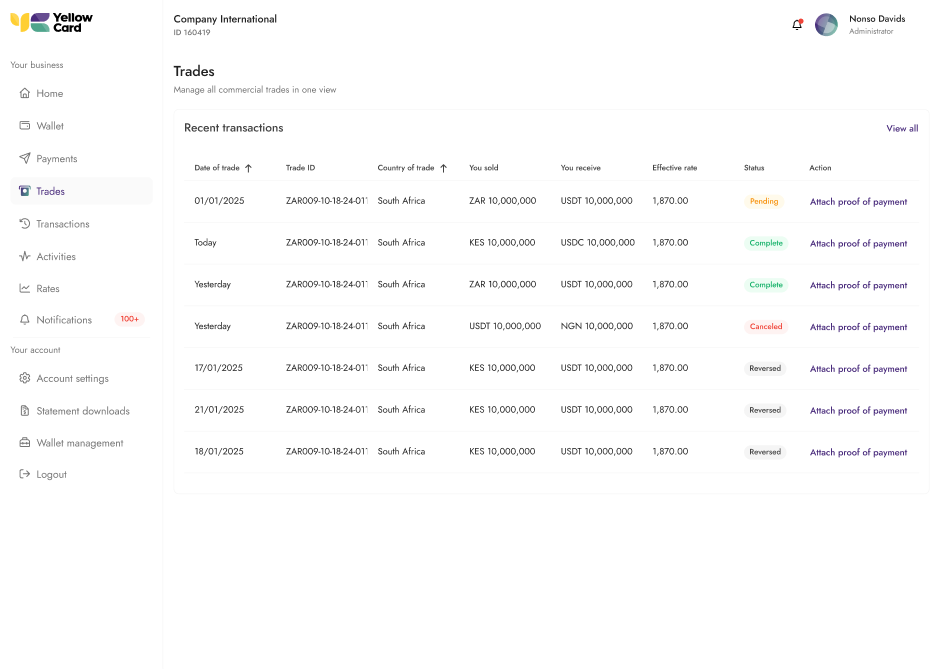
While we grew into full automation, we had a page to accommodate offline trades. This was also done to help drive adoption
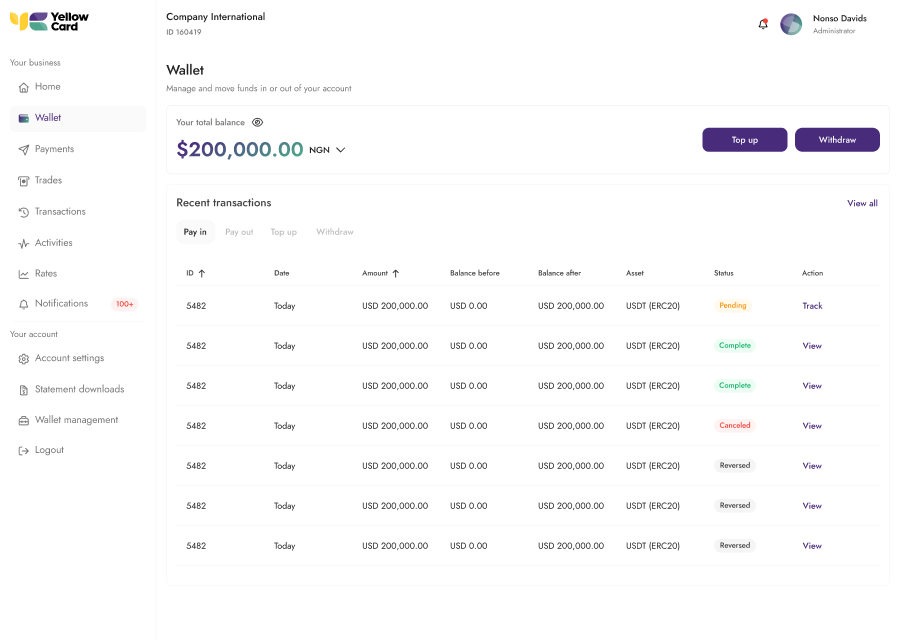
First iteration of the wallets view Highlighting Top and Withdraw transactions
The hardest moment wasn't a design problem. It was a clarity problem.
While working on this project i noticed that Custom wallet permissions has no clear direction. The PM didn't have answers, I didn't have answers, and we were stalling. I made the call to pull custom permissions out entirely and treat it as a separate workstream. That one decision unblocked the whole project.
We later had a brainstorming session to better understand the scope of permissions and how it would feed into custom wallets

Permissions brainstorming session done on Figjam
Three things that made the difference for the final product
A transaction flow that respects your time
My first instinct was to design for granularity. Four separate steps. It created friction, not confidence. I condensed it to one input. Engineering pushed further, making transactions universal so clients could initiate from anywhere in the portal.
The Convert flow is practically one of the most important flows ont he portal as it mirrors same activities carried out offline from the OTC desk, it was a win making it just a 2 step process
Old convert flow

New convert flow
Multi-signature approvals that institutions can trust
Institutional clients need controls, not just a send button. Multi-sig gave businesses the compliance guardrails to move money at scale with confidence.
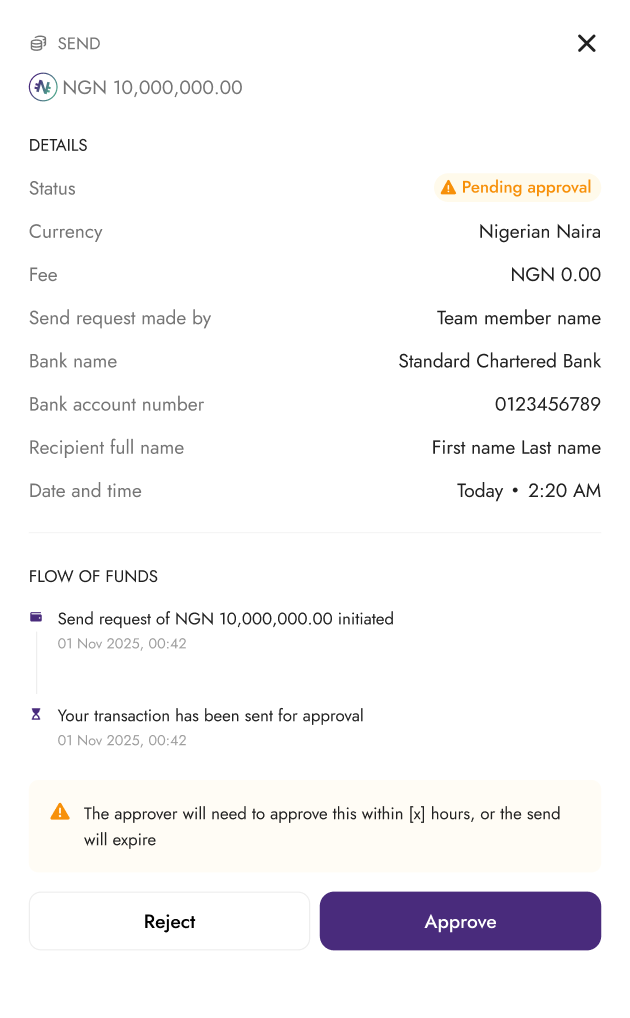
Maker-checker transaction approvals per client request
A wallet system built for complexity
Primary and custom wallets existed because different clients operate differently. My job was to make both work clearly inside one system, visual differentiation, seamless transactions between wallet types, consistent data across both.
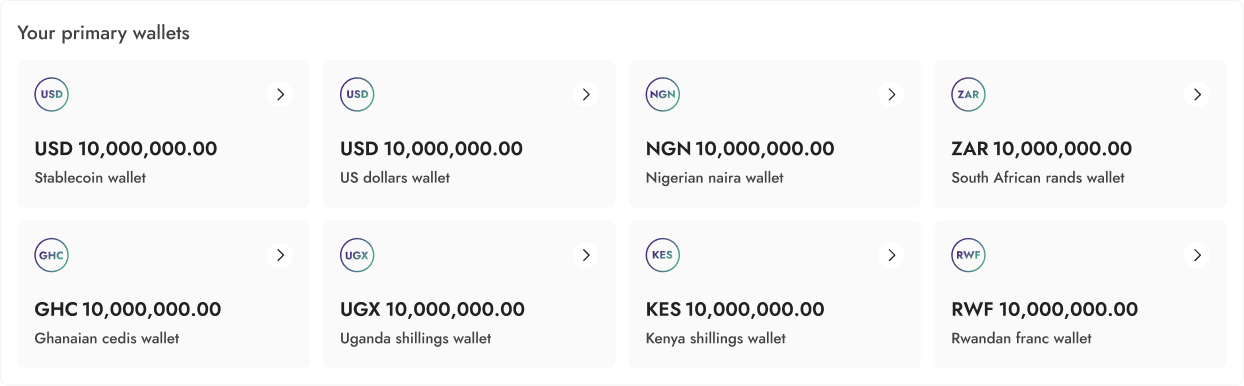
Different wallets assigned for different functions
Different wallets assigned for different functions
Results and impact
The learning curve from WhatsApp to portal was smaller than anyone expected. Clients adapted naturally. That's the quiet validation you work toward.
$6B+ total trade volume at Yellowcard, the portal is the infrastructure built to support and grow that number.
5 clients fully migrated off WhatsApp.
1 unified foundation for both OTC and API clients, ready to scale.
The honest gap is SLA times. It's not a design problem but it affects the experience. We're improving.
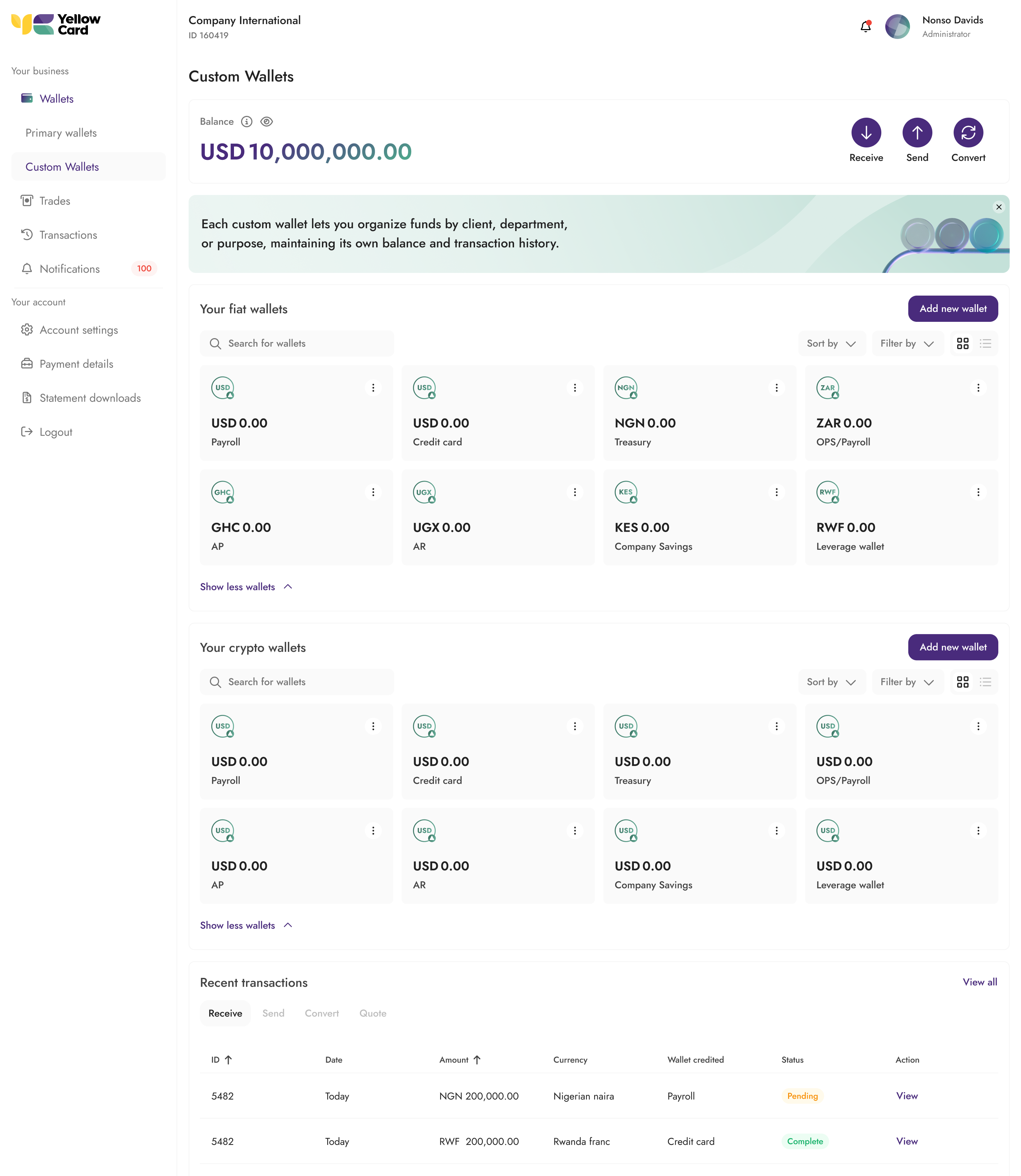
Final look
Key learnings
This project stretched me in ways I didn't expect.
Working across treasury, security, finance and engineering taught me how complex processes actually move inside large organisations.
The biggest design lever wasn't visual, it was simplicity. Making complicated financial operations feel effortless is harder than it looks, and more valuable than almost anything else you can do for an operator.
I also learned that at this level, compliance and security aren't constraints to design around. They're part of the product. Being adaptable and open to change wasn't optional, scope shifted constantly and the ability to move with it kept the project on track.
And none of this would have been what it is without the team. The engineers, product managers, and fellow designers who challenged and shaped the work made it better at every stage.

Contact me
Let’s talk about how i can bring your product idea to life. Dudumukwu@gmail.com :)